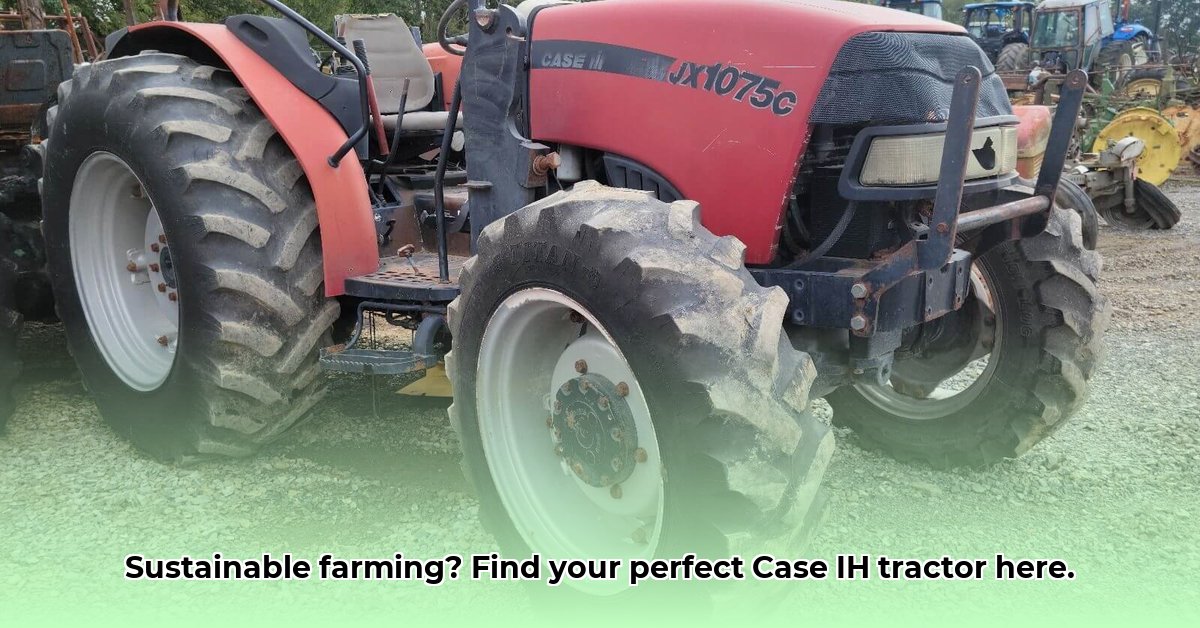
Finding the right tractor is crucial for efficient and sustainable farming. Buying a used Case IH tractor from a salvage yard offers a compelling blend of cost savings and environmental responsibility. This article explores the benefits, challenges, and practical steps involved in this approach. For more information on Case IH tractors, check out this resource.
The Used Tractor Market: A Sustainable Alternative
The market for used agricultural equipment is thriving. Farmers are increasingly recognizing that a well-maintained, pre-owned Case IH tractor can substantially reduce costs compared to new equipment. The initial investment is significantly lower, a considerable advantage, especially for farmers with tight budgets. This smart approach allows for the repurposing of existing resources, creating a circular economy model within the agricultural sector. While sources like TractorPartsAsap.com 1 highlight the vast availability of parts, it's important to acknowledge that access to parts can vary depending on the tractor's age and model; older models may present more challenges in sourcing parts.
Environmental Considerations: Minimizing Your Farm's Footprint
Choosing a used Case IH tractor is a move toward environmentally responsible farming. Manufacturing new equipment is resource-intensive and generates significant carbon emissions. Buying used directly reduces this environmental impact. It’s akin to recycling on a larger scale, extending the life of existing resources and diverting waste from landfills. However, there are nuances. Older models might necessitate more frequent repairs, potentially increasing the demand for parts and creating transportation-related emissions. Furthermore, older machines may lack compatibility with modern, efficiency-enhancing technologies. This presents a trade-off between immediate cost savings and potential long-term efficiency gains. The key is to carefully consider the full lifecycle environmental impact of each option.
Cost-Benefit Analysis: A Calculated Approach
The decision to buy new versus used involves careful financial consideration. While a used Case IH tractor offers lower initial costs, potential repair expenses need careful assessment. New tractors depreciate rapidly; used tractors have already absorbed a significant portion of that initial depreciation. A comprehensive cost-benefit analysis requires forecasting potential repair costs against initial savings. Gathering data on the repair history of similar tractors and estimating future maintenance needs will greatly aid the decision-making process. The total cost of ownership will vary based on tractor condition, usage patterns, and parts accessibility. Consider comparing the total cost of ownership over the life of the equipment, factoring in fuel efficiency and maintenance needs.
A Farmer's Guide to Used Tractor Success: A Step-by-Step Approach
Purchasing a used Case IH tractor doesn't have to be daunting. Follow these steps for a smoother process:
Thorough Pre-Purchase Inspection: Engage a qualified mechanic for a comprehensive inspection. This expert will identify potential issues, wear and tear, and hidden damage—a crucial investment that prevents costly surprises down the line. A thorough inspection can save you thousands of dollars in future repairs.
Strategic Parts Sourcing: Before purchasing, investigate parts availability. Locate reliable suppliers, explore online resources, and consider building relationships with local mechanics specializing in older models. A robust parts network is essential for minimizing downtime.
Responsible End-of-Life Planning: Plan for responsible disposal. Recycle usable parts, find a reputable buyer for the tractor, or engage in environmentally sound recycling programs. Consider the environmental impact throughout the entire lifecycle, from purchase to disposal.
The Future of Sustainable Agriculture and Used Equipment
Technological advancements, such as upgrades and retrofits, are extending the operational lifespan of older tractors. Government policies supporting used equipment and responsible parts management are further shaping the future of sustainable agriculture. Manufacturers are also increasingly focusing on designs that improve durability and repairability. The future of sustainable agriculture rests upon a combination of technological advancements, government policy and conscious decision-making by farmers.
Finding Your Case IH Tractor Salvage Yard: A Practical Guide
Locating a reliable parts source is critical. Online searches, local business directories, and networking within your farming community are effective strategies. Factor in transportation costs when considering distance to a salvage yard; proximity can significantly reduce these expenses.
Weighing Your Options: A Summary of Pros and Cons
| Pros | Cons |
|---|---|
| Lower initial cost | Higher potential repair costs |
| Reduced environmental impact | Parts sourcing challenges for older models |
| Reduced initial depreciation | Requires thorough pre-purchase inspection |
| Supports a circular economy | May require specialized repair knowledge |
| Potentially wider selection of parts | Potential incompatibility with new technologies |
Buying a used Case IH tractor from a salvage yard requires planning and diligence. However, the potential cost savings and environmental benefits make it a compelling option for environmentally conscious farmers. Carefully weigh your options to align this decision with your long-term goals.